
6 min read
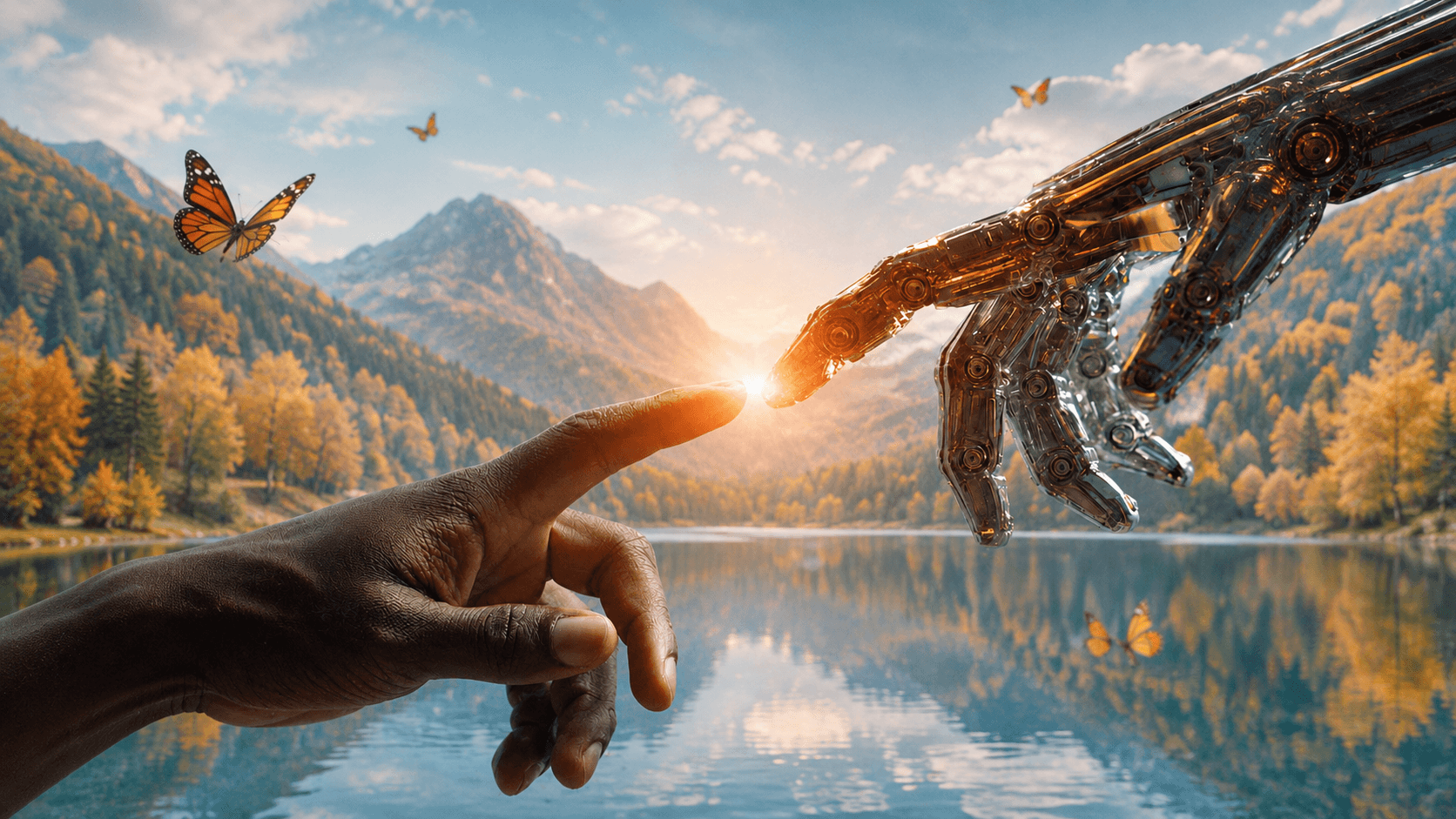
Artificial Intelligence’s Butterflies
There is no doubt that there is fear around this question:
WHAT WILL HAPPEN WHEN ARTIFICIAL INTELLIGENCE REACHES SINGULARITY, THAT IS, WHAT WILL HAPPEN WHEN AI WAKES UP?
This is the question that causes many of us to imagine the movie Terminator which did not go well for humanity hence the fear. There are, however, others who are excited about the significance of AI’s singularity. Before continuing, the reader may be asking, “what is singularity, how is it related to AI, and why would someone be excited about this?” Believe it or not, the easiest way to answer this question is to discuss physics and its event horizon of a black hole. Do not worry. We are not going to dive into the physics of black holes. Instead, we will just look at the question that is on physicist’s minds:
“WHAT HAPPENS AFTER YOU CROSS THE EVENT HORIZON OF A BLACK HOLE?”
This crossing that occurs is known as singularity, and the answer to the physicist’s question is very simple: no one knows. Just like the event horizon, what will happen when AI wakes up? The answer is the same–no one knows what will happen. This idea of computers overtaking the abilities of the human brain is beyond the experts. No one is that smart. Ray Kurzweil, a computer scientist however, offers us a prediction: “The singularity will represent the culmination of the merger of our biological thinking and the existence with our technology, resulting in a world that is still human but transcends our biological roots.” According to him, when this event horizon crossing occurs, “there will be no distinction…between human and machine or between physical and virtual reality.”
As Catholics, we may see or not see the absurdity of Kurzweil’s prediction, but regardless of how much we actually understand from his vision of the future for humanity, all of us can have peace of mind. Why? First, his ideas are based around the belief of the materialists which is simply the ideology that humans are just made up of biological processes which means humans do not possess a soul. Since there is no such thing as a soul for Kurzweil, that is, an immaterial or spiritual reality that transcends the material, his science is confident that it will be able to reverse engineer the human brain. This is to say, one day science will have the ability to transfer human consciousness to a machine. This is not all. Science will also be able to allow a person to “live forever” since their consciousness can be successfully transferred from one machine to another. This is what has the materialists really excited, and one of the reasons why we see entrepreneurs investing so much in this technology.
We could go into philosophy and theology to argue Kurzweil and the materialist’s view, but it is science itself that shows why they have nothing to be excited about. There is one growing science in human digestion that if materialists are not aware of it yet, they will soon have to confront it when it comes to this whole concept of consciousness transference. What is now in question around human consciousness being influenced or controlled only in the brain may no longer be correct. This is to say, reverse engineering the brain is only the beginning when it comes to allocating and transferring human consciousness.
THE GUT, KNOWN AS THE SECOND BRAIN, IS GOING TO HAVE TO BE REVERSED ENGINEERED AS WELL!
Reverse engineering the brain is going to be complicated enough, but it looks like scientists are going to also have to figure out how to incorporate in their algorithms the supercomputer that exists in the digestive system. Containing between 50-100 million nerve cells, this second brain is known as the enteric nervous system (ENS). This highly complex system that science is just starting to understand is intimately connected to the brain, and more and more research is showing that this system can influence basic emotions, pain sensitivity, and quite possibly guide decision making which extends beyond what someone wants to eat. There is more. Not only do materialists have to solve how to reverse engineer this network, there is even a bigger undertaking that they must solve. They are also going to have to figure out how to incorporate, and ultimately connect their technology to a network larger than any social media platform that exists within the gut and what influences the human consciousness experience–microbes. There are an estimated 100 trillion microbes that live in the darkness of the human gut. If these microbes were to be put together and shaped into an organ, it would weigh somewhere between 2 to 6 pounds which by the way, the brain weighs only 2.6 pounds. This is why these microbes are known as the "forgotten organ.”
In his book, The Mind-Gut Connection, Dr. Emeran Mayer, an expert in gut-brain science, discusses the importance of these microbes, and their influence on the human brain and decision making. If computer scientists brought Dr. Mayer and his colleagues into this conversation, they would have to dedicate serious time to discussing AI not just having super intelligence and consciousness, but also having a super gut instinct and subconsciousness. With the wealth of information that this area of science is bringing to the table, another question would then need to be included in AI’s research and development:
WHEN AI WAKES UP, WHEN WILL AI FIRST HAVE BUTTERFLIES?
These butterflies that humans experience are not only part of the decision making process, but also human consciousness hard at work. Materialists and entrepreneurs have to confront the facts that the brain they want to transfer does not just operate with logic or what computer scientists would call algorithms. Humans also make decisions that have nothing to do with logic. A lot of times, humans are not reasonable, and decisions are not made through conscious awareness. In his bestselling book Thinking, Fast and Slow, Psychologist Daniel Kahneman describes intuitive decision making, and how it is the “secret author of many of the choices and judgments” that are made by humans. This suggests that human consciousness extends beyond the rational mind. It is not always objective, but a lot of times it is subjective. What is even more profound to think about is reason can be trained, but when it comes to types of thinking like gut based decision making (butterflies), Dr. Mayer points out that “there is no formal mechanism in place to train and optimize this remarkable ability.”
The subject of AI, consciousness and what is human consciousness has not even been scratched here. AI is being closely looked at, and not just from the eyes of science but theology, philosophy, and all areas that focus on humanity and what it means to be human which includes those who study the digestive system.
Returning to the fear and doubt of AI waking up. The answer still remains–we do not know what will happen, but no matter what AI develops into, it will be led by those who C.S. Lewis calls, -Materialist Magicians. Even if they can make it look like AI is awake or aware or even alive, Catholics know better than anyone that machines will never be able to have souls just like they will never be able to experience the sensation of butterflies. Its "consciousness” will be via programming and it will be programmed by humans. So let us just remember:
THE ONLY TERMINATOR THAT WILL EXIST IS THE ONE THAT HUMANITY CREATES.
Joseph Daniels Acutis AI writer IG: @catholically_conscious
Sources: Kahneman, D. Thinking, Fast and Slow. Farrar, Straus and Giroux, 2011. Mayer, E. The Mind-Gut Connection. HarperWave, 2016. Kurzweil, R. The Singularity Is Near. Viking, 2005.